

As a supplier of Hook Type Shot Blasting Machines, I often encounter inquiries about the versatility of our equipment. One question that comes up frequently is whether a Hook Type Shot Blasting Machine can be used for cleaning magnesium parts. In this blog post, I'll explore this topic in detail, drawing on both technical knowledge and practical experience to provide a comprehensive answer.
Understanding Hook Type Shot Blasting Machines
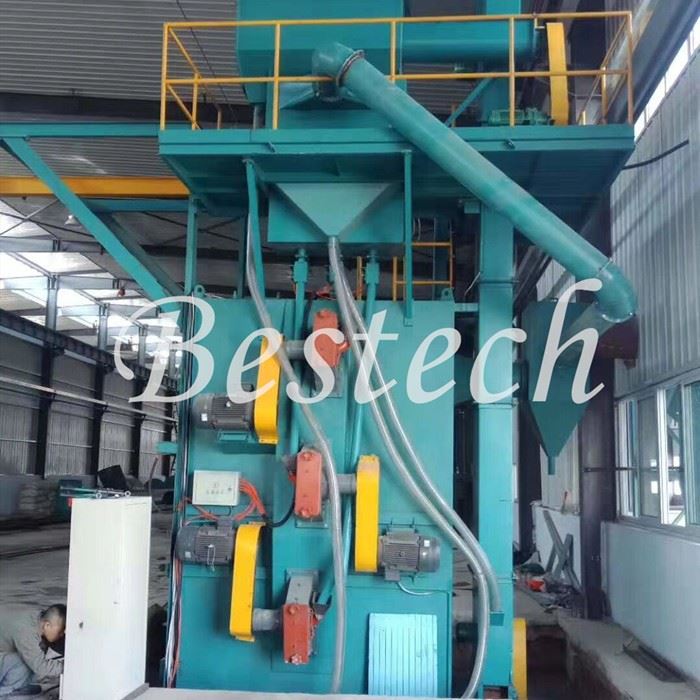
Before delving into the compatibility with magnesium parts, it's essential to understand what Hook Type Shot Blasting Machines are. These machines are designed to clean, descale, and strengthen metal surfaces by propelling abrasive materials at high speeds. The hook system allows for easy loading and unloading of parts, making it suitable for a wide range of applications.
There are different types of Hook Type Shot Blasting Machines available, each with its own unique features and capabilities. For example, the Spinner Hanger Shot Blasting Machine is ideal for small to medium-sized parts that require uniform cleaning. It uses a rotating hanger to ensure all surfaces of the part are exposed to the abrasive media.
On the other hand, the Double Hook Shot Blasting Machine offers increased productivity by allowing two parts to be processed simultaneously. This type of machine is often used in high-volume production environments.
The Wheel Rims Shot Blasting Machine is specifically designed for cleaning and preparing wheel rims. It can effectively remove rust, scale, and paint from the rims, ensuring a smooth and clean surface for painting or coating.

Properties of Magnesium Parts
Magnesium is a lightweight metal with excellent strength-to-weight ratio, making it a popular choice in various industries, including automotive, aerospace, and electronics. However, magnesium also has some unique properties that need to be considered when using a shot blasting machine.
One of the main challenges with magnesium is its high reactivity. Magnesium can react with oxygen in the air to form magnesium oxide, which can cause corrosion and reduce the part's performance. Additionally, magnesium is highly flammable, especially in the form of fine dust. This means that special precautions need to be taken when working with magnesium parts to prevent fires and explosions.
Another important property of magnesium is its low melting point. Magnesium has a melting point of around 650°C, which is relatively low compared to other metals. This means that excessive heat generated during the shot blasting process can cause the magnesium to melt or deform, leading to damage to the part.
Can a Hook Type Shot Blasting Machine be Used for Cleaning Magnesium Parts?
The short answer is yes, a Hook Type Shot Blasting Machine can be used for cleaning magnesium parts. However, there are several factors that need to be considered to ensure a safe and effective cleaning process.
Abrasive Media Selection
The choice of abrasive media is crucial when working with magnesium parts. It's important to select a media that is non-sparking and has a low iron content to prevent the formation of iron-magnesium alloys, which can cause corrosion. Some suitable abrasive media for cleaning magnesium parts include glass beads, ceramic beads, and plastic media.
Machine Modifications
To ensure the safe and effective cleaning of magnesium parts, the Hook Type Shot Blasting Machine may need to be modified. This may include installing explosion-proof equipment, such as dust collectors and ventilation systems, to prevent the accumulation of magnesium dust and reduce the risk of fires and explosions. Additionally, the machine may need to be equipped with temperature sensors to monitor the temperature during the shot blasting process and prevent overheating.
Process Parameters
The process parameters, such as blasting pressure, shot flow rate, and blasting time, also need to be carefully controlled when cleaning magnesium parts. It's important to use a low blasting pressure to avoid damaging the part and to ensure a uniform cleaning effect. The shot flow rate should be adjusted to ensure that the abrasive media is evenly distributed across the part's surface. The blasting time should be kept as short as possible to minimize the heat generated during the process.
Benefits of Using a Hook Type Shot Blasting Machine for Cleaning Magnesium Parts
Despite the challenges, there are several benefits to using a Hook Type Shot Blasting Machine for cleaning magnesium parts.
Improved Surface Quality
Shot blasting can effectively remove rust, scale, and other contaminants from the surface of magnesium parts, leaving a clean and smooth surface. This can improve the part's appearance and performance, as well as enhance its adhesion to paints and coatings.
Increased Productivity
A Hook Type Shot Blasting Machine can clean multiple parts simultaneously, which can significantly increase productivity compared to manual cleaning methods. This is especially beneficial for high-volume production environments.
Cost Savings
Using a Hook Type Shot Blasting Machine can reduce labor costs and improve the efficiency of the cleaning process. Additionally, the machine can extend the lifespan of the parts by removing contaminants that can cause corrosion and damage.
Conclusion
In conclusion, a Hook Type Shot Blasting Machine can be used for cleaning magnesium parts, but it requires careful consideration of the abrasive media, machine modifications, and process parameters. By following the proper safety procedures and using the right equipment, a Hook Type Shot Blasting Machine can provide a safe and effective way to clean magnesium parts, improving their surface quality, productivity, and cost-effectiveness.
If you're interested in using a Hook Type Shot Blasting Machine for cleaning magnesium parts or have any other questions about our products, please don't hesitate to contact us. Our team of experts is always available to provide you with the information and support you need to make an informed decision.
References
- ASM Handbook, Volume 5: Surface Engineering, ASM International, 2007.
- Magnesium: Properties, Processing, and Applications, John H. Westbrook and R. Darolia, eds., John Wiley & Sons, 2003.
- Shot Blasting Technology: Principles and Applications, J. T. Black and G. R. Kohser, eds., Marcel Dekker, 2001.