

As a seasoned supplier of sand blasting rooms, I've witnessed firsthand the transformative power of these industrial workhorses. A well - equipped sand blasting room is essential for a wide range of applications, from surface preparation in manufacturing to restoration projects. In this blog, I'll delve into the essential accessories that every sand blasting room needs to function efficiently and safely.
Abrasive Delivery Systems
The heart of any sand blasting operation is the abrasive delivery system. This system is responsible for transporting the abrasive material from the storage container to the blasting nozzle.
One of the most common types is the pressure pot. Pressure pots are sealed containers that use compressed air to force the abrasive out through the blasting hose. They come in various sizes, and the choice depends on the scale of the blasting project. For small - scale operations, a smaller pressure pot might suffice, while large - scale industrial projects may require larger, high - capacity pots.
Another option is the suction blasting system. Unlike pressure pots, suction blasting systems rely on the Venturi effect to draw the abrasive into the blasting stream. They are generally less expensive and more portable, making them a great choice for smaller workshops or on - site jobs.
Blasting Nozzles
The blasting nozzle is where the abrasive meets the surface to be blasted. It's a crucial accessory that can significantly impact the efficiency and quality of the blasting process.
Nozzles come in different shapes and materials. Tungsten carbide nozzles are popular due to their high wear resistance. They can withstand the constant abrasion from the abrasive material, ensuring a long service life. The shape of the nozzle also matters. Straight - bore nozzles are suitable for general - purpose blasting, while convergent - divergent nozzles can increase the velocity of the abrasive stream, making them ideal for more demanding applications.
Abrasive Reclaim Systems
To make the sand blasting process more cost - effective and environmentally friendly, an abrasive reclaim system is a must. These systems collect the used abrasive material after it has hit the surface and recycle it for reuse.
There are two main types of abrasive reclaim systems: pneumatic and mechanical. The Pneumatic Abrasive Reclaim Sandblast Room uses air currents to separate the used abrasive from dust and debris. It then transports the clean abrasive back to the blasting system. On the other hand, the Mechanic Recovery Sand Blasting Room With Dust Collector uses mechanical means such as conveyors and screens to separate and recycle the abrasive.
Dust Collection Systems
Sand blasting generates a significant amount of dust, which can be harmful to the operators' health and the environment. A proper dust collection system is essential to maintain a safe and clean working environment.
Dust collectors work by capturing the dust particles generated during the blasting process. They typically consist of a series of filters that trap the dust, allowing clean air to be released back into the environment. Some advanced dust collectors also have automatic cleaning mechanisms that can remove the collected dust from the filters, ensuring continuous operation.
Lighting Systems
Good lighting is crucial in a sand blasting room. Operators need to have a clear view of the surface being blasted to ensure accuracy and quality.
LED lighting is a popular choice for sand blasting rooms. It provides bright, energy - efficient illumination. The lights should be strategically placed around the room to eliminate shadows and provide uniform lighting across the entire workspace.
Safety Equipment
Safety should always be a top priority in a sand blasting room. There are several pieces of safety equipment that are essential for protecting the operators.

Blast suits are designed to protect the operators from the abrasive material and dust. They are usually made of durable, abrasion - resistant materials. Respirators are also crucial to prevent the inhalation of dust particles. There are different types of respirators available, including air - supplied respirators that provide a constant flow of clean air to the operator.
In addition, safety goggles or face shields are necessary to protect the eyes from flying abrasive particles. Ear protection is also recommended, as the blasting process can be quite noisy.
Containment Structures
To prevent the spread of abrasive material and dust outside the sand blasting room, a proper containment structure is required.
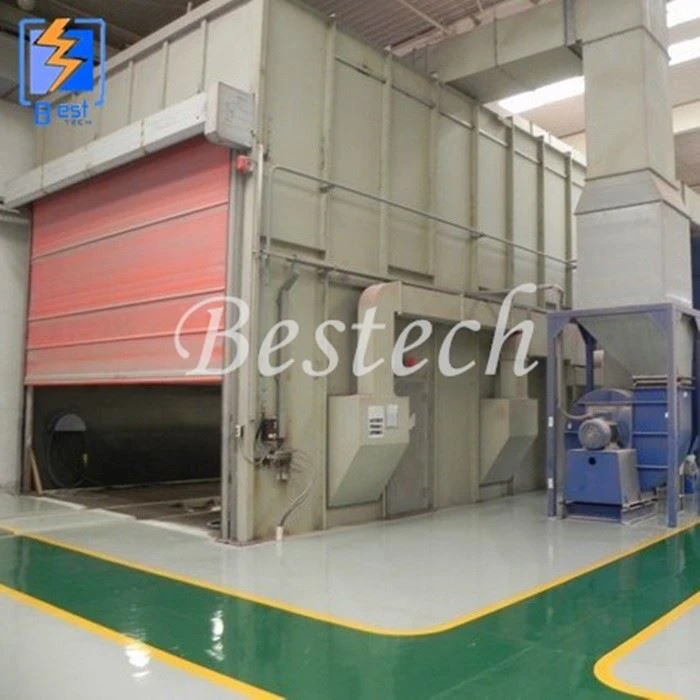
The Sand Blasting Container is a popular option for smaller operations or for on - site blasting. It provides a self - contained environment that can be easily transported and set up. For larger industrial facilities, a custom - built sand blasting room with reinforced walls and a sealed door can effectively contain the blasting process.
Monitoring and Control Systems
Modern sand blasting rooms often come equipped with monitoring and control systems. These systems allow operators to monitor various parameters such as abrasive flow rate, air pressure, and dust levels.
By having real - time data, operators can make adjustments to the blasting process to ensure optimal performance. For example, if the abrasive flow rate is too low, the operator can increase it to improve the blasting efficiency. Control systems can also be used to automate certain aspects of the blasting process, reducing the need for manual intervention.
Conclusion
A well - equipped sand blasting room requires a combination of high - quality accessories to function efficiently and safely. From the abrasive delivery system to the monitoring and control systems, each accessory plays a vital role in the overall performance of the sand blasting operation.
If you're in the market for a sand blasting room or looking to upgrade your existing setup, I encourage you to reach out. Our team of experts can help you select the right accessories for your specific needs. Whether you're a small workshop or a large industrial manufacturer, we have the solutions to meet your requirements. Contact us today to start a conversation about your sand blasting needs and explore the possibilities of enhancing your operations.
References
- Industrial Sandblasting Handbook, 3rd Edition
- Safety Guidelines for Sandblasting Operations, Occupational Safety and Health Administration
- Abrasive Blasting Technology: Principles and Applications, John Wiley & Sons