

In the realm of foundry operations, green sand reclamation plants play a pivotal role in optimizing the use of molding sand. As a prominent supplier of Green Sand Reclamation Plants, I am well - versed in the sand mixing capabilities that these plants possess, which are crucial for ensuring high - quality casting production.
Understanding the Basics of Sand Mixing in a Green Sand Reclamation Plant
Sand mixing is a fundamental process within a green sand reclamation plant. The primary goal is to create a homogeneous mixture of reclaimed sand, new sand, binders, and additives. This homogeneous mixture is essential for producing molds with consistent properties, such as strength, permeability, and collapsibility.
The reclaimed sand, which is recovered from used molds, often retains some of the original binder and additives. However, it may also contain contaminants and have non - uniform properties. New sand is added to adjust the overall sand properties and replenish any sand lost during the casting process. Binders, typically clay, are crucial for holding the sand grains together, while additives can improve various properties like moisture control and surface finish.
Key Factors Affecting Sand Mixing Capabilities
1. Mixer Design
The design of the mixer is a critical factor in determining the sand mixing capabilities. There are different types of mixers used in green sand reclamation plants, such as paddle mixers, muller mixers, and high - intensity mixers.
Paddle mixers are relatively simple in design. They consist of paddles that rotate within a trough, moving the sand around. While they are cost - effective and have a large capacity, their mixing efficiency may be limited. They are suitable for less demanding applications where a moderate level of mixing is required.
Muller mixers, on the other hand, are more complex. They have a rotating pan and one or more heavy rollers or muller wheels. The sand is crushed and kneaded between the rollers and the pan, resulting in a more thorough mixing. Muller mixers can achieve a high degree of homogeneity, especially when dealing with materials that require intense shearing, such as clay - bonded sand.
High - intensity mixers use high - speed rotating blades to mix the sand. They can quickly disperse binders and additives throughout the sand, reducing mixing time. These mixers are ideal for applications where a high - quality, uniform mixture is needed in a short period.
2. Mixing Time
The amount of time the sand spends in the mixer is another important factor. Insufficient mixing time can result in an uneven distribution of binders and additives, leading to inconsistent mold properties. On the other hand, excessive mixing time can be wasteful and may even damage the sand grains or degrade the binder.

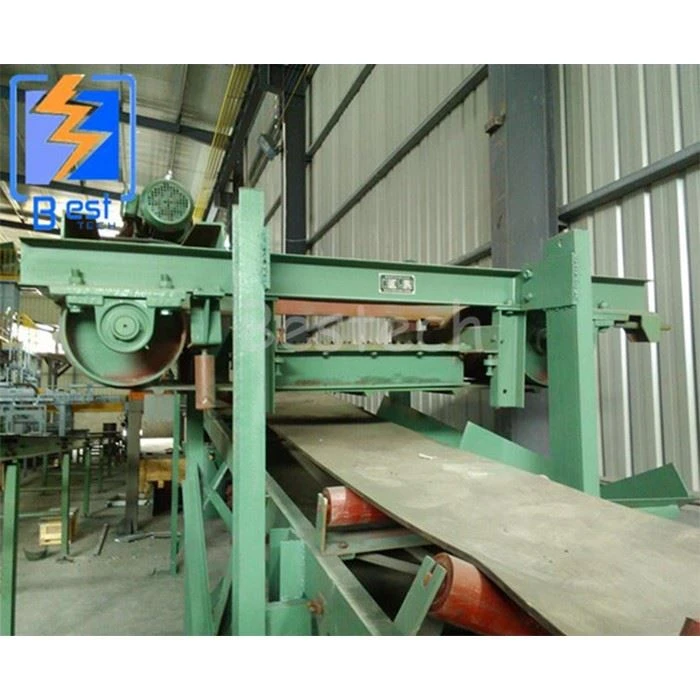
The optimal mixing time depends on several factors, including the type of mixer, the sand composition, and the desired level of homogeneity. In general, a well - designed mixer can achieve a satisfactory mix within a reasonable time frame. For example, a high - intensity mixer may only require a few minutes of mixing, while a paddle mixer may need 10 - 15 minutes or more.
3. Sand Flow and Feeding
Proper sand flow and feeding are essential for efficient mixing. The sand should be fed into the mixer at a consistent rate to ensure a uniform mixture. If the sand is fed too quickly, the mixer may not be able to handle it effectively, leading to poor mixing. Conversely, if the feeding rate is too slow, it can reduce the overall productivity of the plant.
In addition, the sand should flow smoothly through the mixer. Any blockages or restrictions in the sand flow can disrupt the mixing process and result in an inconsistent mixture. Some green sand reclamation plants use conveyor systems and hoppers to control the sand flow and feeding, ensuring a steady supply of sand to the mixer.
Advanced Sand Mixing Technologies in Green Sand Reclamation Plants
1. Automated Control Systems
Modern green sand reclamation plants are increasingly equipped with automated control systems. These systems can monitor and adjust various parameters during the mixing process, such as the amount of binder and additives, the mixing time, and the sand flow rate.
For example, sensors can measure the moisture content of the sand in real - time. If the moisture content is too high or too low, the control system can automatically adjust the amount of water added during the mixing process. This helps to maintain a consistent sand quality and reduces the need for manual intervention.
2. Online Monitoring and Analysis
Online monitoring and analysis tools are also being used to improve sand mixing capabilities. These tools can provide detailed information about the sand properties, such as particle size distribution, density, and strength. By analyzing this data, operators can make informed decisions about adjusting the mixing process to optimize the sand quality.
For instance, if the particle size distribution of the sand is found to be non - uniform, the operator can adjust the mixer settings or the sand feeding rate to improve the mixing. Online monitoring also allows for early detection of any issues in the mixing process, enabling timely corrective actions to be taken.
Applications of Well - Mixed Sand in Foundry Operations
1. High - Quality Castings
A well - mixed sand mixture is essential for producing high - quality castings. The consistent properties of the sand ensure that the molds have the required strength to withstand the molten metal pressure during casting. This reduces the risk of mold defects, such as cracks, blowholes, and misruns.
In addition, the uniform distribution of binders and additives in the sand can improve the surface finish of the castings. The sand provides a smooth surface for the molten metal to solidify against, resulting in castings with better dimensional accuracy and a more aesthetically pleasing appearance.
2. Increased Productivity
Efficient sand mixing can also lead to increased productivity in the foundry. When the sand is well - mixed, the molding process can be carried out more quickly and smoothly. There is less downtime due to mold defects or adjustments in the molding process, allowing for a higher production rate.
Moreover, the consistent quality of the sand means that fewer castings are rejected due to quality issues. This reduces the overall production costs and increases the profitability of the foundry.
Related Equipment in Green Sand Reclamation Plants
In addition to the sand mixing capabilities, there are other important equipment in a green sand reclamation plant that work in conjunction with the mixer. For example, the Sand Shakeout Cooling Drum is used to separate the sand from the castings and cool the sand. This helps to prepare the sand for the reclamation and mixing process.
The Clay Sand Casting Processing Production Line integrates various equipment, including the mixer, to provide a complete solution for clay - sand casting. It ensures a seamless flow of materials from sand preparation to casting production.
The Green Sand Processing Production Line is designed to handle all aspects of green sand reclamation and processing. It includes equipment for sand screening, magnetic separation, and mixing, ensuring that the sand is properly prepared for use in the foundry.
Conclusion
The sand mixing capabilities of a green sand reclamation plant are crucial for the success of foundry operations. By understanding the key factors affecting sand mixing, such as mixer design, mixing time, and sand flow, and by utilizing advanced technologies like automated control systems and online monitoring, high - quality sand mixtures can be achieved.
Well - mixed sand leads to high - quality castings, increased productivity, and reduced production costs in the foundry. As a supplier of Green Sand Reclamation Plants, I am committed to providing plants with excellent sand mixing capabilities to meet the diverse needs of our customers.
If you are interested in learning more about our Green Sand Reclamation Plants or have specific requirements for your foundry operations, I encourage you to reach out to us for a detailed discussion. We can help you choose the right equipment and optimize the sand mixing process to achieve the best results for your business.
References
- Campbell, J. (2003). Castings. Butterworth - Heinemann.
- Twardowski, J. (2010). Handbook of Mold and Core Sands. William Andrew Publishing.
- Schwerdtfeger, H. (2015). Foundry Technology: An Introduction. Springer.