

Hey there! As a supplier of sand mixer machines, I've seen firsthand how different factors can impact the performance of these machines. One crucial factor that often gets overlooked is the sand moisture content. In this blog, I'll dive into how the sand moisture content influences the mixing performance of a sand mixer machine.
The Basics of Sand Mixer Machines
Before we get into the details of sand moisture content, let's quickly go over what sand mixer machines are all about. Sand mixer machines are used in foundries and other industries to mix sand with various additives to create molding sand. This molding sand is then used to make molds for casting metal parts.
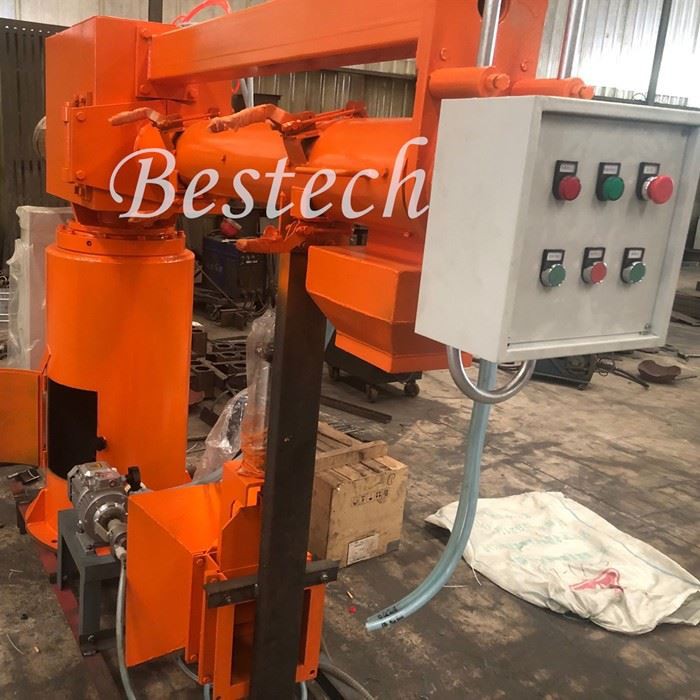
We offer a range of sand mixer machines, including the Green Sand Roller Sand Mixer Machine, the Single Arm Resin Sand Mixer Machine, and the Green Sand Mixer. Each of these machines has its own unique features and benefits, but they all share the common goal of creating high-quality molding sand.
Why Sand Moisture Content Matters
The moisture content of the sand plays a vital role in the mixing process. It affects everything from the flowability of the sand to the bonding strength of the molding sand. Here's a closer look at how sand moisture content impacts the mixing performance of a sand mixer machine.
Flowability
One of the first things that sand moisture content affects is the flowability of the sand. When the sand is too dry, it tends to be more difficult to mix. The dry sand particles can clump together, making it harder for the mixer to distribute the additives evenly. On the other hand, when the sand is too wet, it can become sticky and difficult to handle. The wet sand may also clog the mixer, reducing its efficiency.
A proper moisture content helps the sand flow more freely through the mixer. This allows the mixer to blend the sand and additives more effectively, resulting in a more uniform mixture.
Bonding Strength
Another important aspect of sand mixing is the bonding strength of the molding sand. The additives in the sand, such as clay or resin, need to bond effectively with the sand particles to create a strong mold. The moisture content of the sand plays a crucial role in this bonding process.

If the sand is too dry, the additives may not be able to bond properly with the sand particles. This can result in a weak mold that is prone to cracking or breaking during the casting process. On the other hand, if the sand is too wet, the excess moisture can weaken the bond between the additives and the sand particles.
The ideal moisture content provides the right environment for the additives to bond with the sand particles. This creates a strong and durable mold that can withstand the high temperatures and pressures of the casting process.
Mixing Efficiency
The moisture content of the sand also affects the mixing efficiency of the sand mixer machine. When the sand has the right moisture content, the mixer can operate more smoothly and efficiently. The mixer doesn't have to work as hard to blend the sand and additives, which can reduce wear and tear on the machine and increase its lifespan.
In contrast, if the sand is either too dry or too wet, the mixer may have to work harder to achieve a uniform mixture. This can lead to increased energy consumption and a shorter lifespan for the mixer.
Finding the Optimal Moisture Content
So, how do you find the optimal moisture content for your sand mixer machine? Well, it depends on several factors, including the type of sand, the additives being used, and the specific requirements of your casting process.
Testing the Sand
The first step is to test the moisture content of your sand. You can use a moisture meter to measure the moisture content accurately. This will give you a baseline to work from and help you determine if any adjustments are needed.
Adjusting the Moisture Content
If the sand is too dry, you can add water to increase the moisture content. However, it's important to add the water gradually and mix it thoroughly to ensure an even distribution. If the sand is too wet, you can dry it out by exposing it to air or using a drying machine.
Monitoring and Adjusting
Once you've found the optimal moisture content, it's important to monitor it regularly. The moisture content of the sand can change over time due to factors such as humidity and storage conditions. By monitoring the moisture content and making adjustments as needed, you can ensure consistent mixing performance and high-quality molding sand.
Conclusion
In conclusion, the sand moisture content has a significant impact on the mixing performance of a sand mixer machine. It affects the flowability of the sand, the bonding strength of the molding sand, and the overall mixing efficiency. By finding the optimal moisture content and monitoring it regularly, you can ensure that your sand mixer machine operates at its best and produces high-quality molding sand.
If you're in the market for a sand mixer machine or have any questions about sand mixing, feel free to reach out to us. We're here to help you find the right solution for your needs. Let's start a conversation and see how we can work together to improve your casting process.
References
- Smith, J. (2020). "The Importance of Sand Moisture Content in Foundry Operations." Foundry Journal, 45(2), 34 - 41.
- Johnson, A. (2019). "Optimizing Sand Mixing for High - Quality Castings." Manufacturing Today, 32(3), 56 - 63.