

Hey there! As a supplier of Continuous Resin Sand Mixers, I often get asked about the quality inspection methods for the mixed sand produced by these machines. Today, I'm gonna share some insights on this topic.
First off, let's understand why quality inspection of the mixed sand is so important. In foundry applications, the quality of the sand mixture directly affects the quality of the castings. If the sand isn't mixed properly, it can lead to defects in the castings, like porosity, poor surface finish, and even structural weaknesses. So, getting the quality of the mixed sand right is crucial for a successful foundry operation.
Visual Inspection
One of the simplest and most immediate ways to check the quality of the mixed sand is through visual inspection. You just take a close look at the sand mixture. The sand should have a uniform color and texture. If you see any clumps or areas with different colors, it could mean that the resin and sand aren't mixed evenly. For example, if there are white patches in the sand, it might be because the resin hasn't been distributed well.
Visual inspection can also help you spot any foreign materials in the sand. Sometimes, small pieces of metal, wood, or other debris can find their way into the sand. These foreign objects can cause problems during the casting process, so it's important to catch them early. Just use your eyes and a good light source to scan the sand mixture.

Flowability Test
The flowability of the mixed sand is another important factor. Good flowability means that the sand can easily fill the mold cavities during the casting process. To test the flowability, you can use a simple device like a flow cone.
Here's how it works: You pour the mixed sand into a cone-shaped container with a small opening at the bottom. Then, you measure the time it takes for the sand to flow out of the cone. If the sand flows out quickly and smoothly, it has good flowability. On the other hand, if it takes a long time or gets stuck in the cone, the flowability might be poor. Poor flowability can lead to incomplete filling of the mold, which results in defective castings.

Strength Test
The strength of the mixed sand is crucial for holding the shape of the mold during the casting process. There are a few different ways to test the strength of the sand. One common method is the compressive strength test.
In this test, you make a small cylindrical sample of the mixed sand and then apply a gradually increasing load until the sample breaks. The amount of force required to break the sample is its compressive strength. A higher compressive strength indicates that the sand mixture is stronger and can better withstand the pressure and forces during casting.
Another strength test is the tensile strength test. Similar to the compressive strength test, you make a sample of the sand, but this time, you pull it apart instead of compressing it. Tensile strength is important because it shows how well the sand can resist cracking and breaking when it's being pulled or stretched.
Resin Content Analysis
The amount of resin in the sand mixture plays a big role in its properties. Too much resin can make the sand too sticky and difficult to work with, while too little resin can result in a weak sand mixture.
There are several ways to analyze the resin content. One method is chemical analysis. You take a sample of the mixed sand and use chemical reagents to break down the resin and measure its amount. This method is quite accurate but can be time - consuming and requires some specialized equipment.

Another way is to use a loss - on - ignition test. You weigh a sample of the mixed sand, then heat it to a high temperature in a furnace. The resin in the sand burns off, and you weigh the remaining sand. The difference in weight before and after heating gives you an estimate of the resin content.
Moisture Content Test
Moisture in the sand mixture can also have a significant impact on its quality. Excess moisture can cause steam explosions during casting, which can be dangerous and also lead to casting defects.
To test the moisture content, you can use a moisture analyzer. This device heats a sample of the sand and measures the weight loss as the moisture evaporates. The percentage of weight loss represents the moisture content of the sand.
Our Continuous Resin Sand Mixers
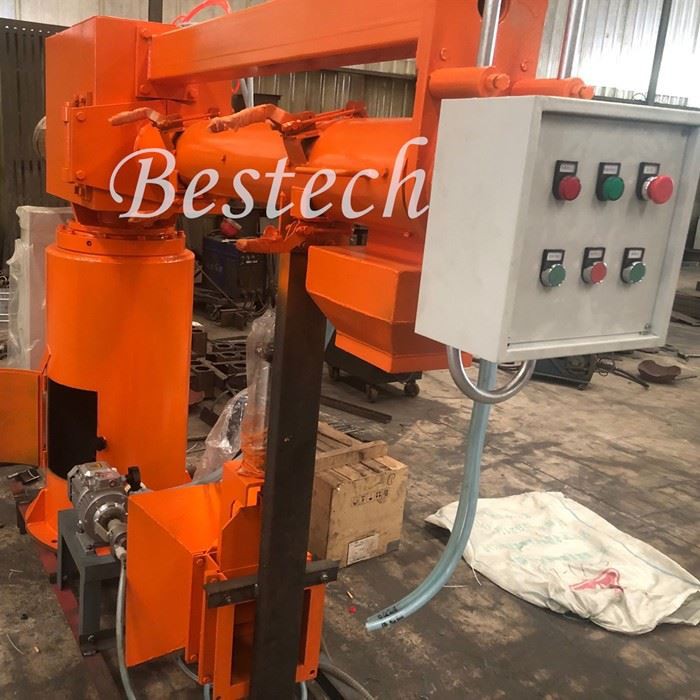
At our company, we offer a range of high - quality Continuous Resin Sand Mixers. Our High - Speed Continuous Sand Mixers are designed to provide fast and efficient mixing, ensuring a uniform sand mixture. The Single Arm Resin Sand Mixer Machine is another great option, which is easy to operate and maintain. And our Sand Mixture Machine for Foundry is suitable for various foundry applications.
If you're in the market for a reliable Continuous Resin Sand Mixer or want to learn more about quality inspection methods for mixed sand, don't hesitate to get in touch. We're here to help you ensure the best quality of your sand mixtures and, ultimately, your castings.
References
- "Foundry Sand Technology" by John Doe
- "Quality Control in Foundry Operations" by Jane Smith
So, if you're looking to improve your foundry process and need a top - notch Continuous Resin Sand Mixer, just reach out to us. We'll be more than happy to have a chat with you and discuss your specific needs. Looking forward to working with you!