

Hey there! As a supplier of Green Sand Reclamation Plants, I've seen firsthand the importance of sand reuse strategies in the foundry industry. Not only does it save costs, but it's also a more sustainable approach. In this blog, I'll share some of the key sand reuse strategies we implement in our Green Sand Reclamation Plants.
Why Sand Reuse Matters
Before diving into the strategies, let's quickly talk about why sand reuse is so crucial. In traditional foundry processes, a huge amount of sand is used, and a significant portion of it ends up as waste. This not only adds to the cost of raw materials but also has a negative impact on the environment. By reusing sand, we can reduce the need for new sand extraction, cut down on waste disposal, and save money in the long run.
Mechanical Reclamation
One of the most common sand reuse strategies is mechanical reclamation. This process involves using mechanical forces to break down and clean the used sand. In our Green Sand Reclamation Plants, we typically start with a shaking or vibrating process to remove any large particles or debris from the used sand. Then, the sand goes through a series of crushers and mills to break it down further into smaller, more uniform particles.
After that, we use air separation to remove any lightweight contaminants, such as dust and organic matter. The cleaned sand is then ready to be reused in the casting process. Mechanical reclamation is a relatively simple and cost - effective method, and it can significantly improve the quality of the reused sand.
Thermal Reclamation
Thermal reclamation is another important strategy. In this process, the used sand is heated to a high temperature to burn off any organic binders and contaminants. We use specialized furnaces in our plants to heat the sand to around 700 - 900 degrees Celsius. At this temperature, the organic materials in the sand are oxidized and removed as gases.
The advantage of thermal reclamation is that it can remove a wider range of contaminants compared to mechanical reclamation. It also restores the sand's original properties more effectively. However, thermal reclamation is more energy - intensive and costly than mechanical reclamation. But in cases where high - quality reused sand is required, it's definitely worth considering.
Chemical Reclamation
Chemical reclamation is a less common but sometimes very effective strategy. This involves using chemical agents to treat the used sand and remove specific contaminants. For example, we can use acids or alkalis to dissolve certain metal oxides or other inorganic contaminants. Chemical reclamation is often used in combination with mechanical or thermal reclamation to achieve the best results.
The key is to choose the right chemical agents and control the treatment process carefully to avoid any negative impacts on the sand's properties. Chemical reclamation can be a bit more complex and expensive, but it can be a game - changer when dealing with highly contaminated sand.
Quality Control
No matter which sand reuse strategy we use, quality control is essential. We have a strict quality control system in place in our Green Sand Reclamation Plants. We regularly test the reused sand for properties such as grain size, shape, moisture content, and chemical composition.
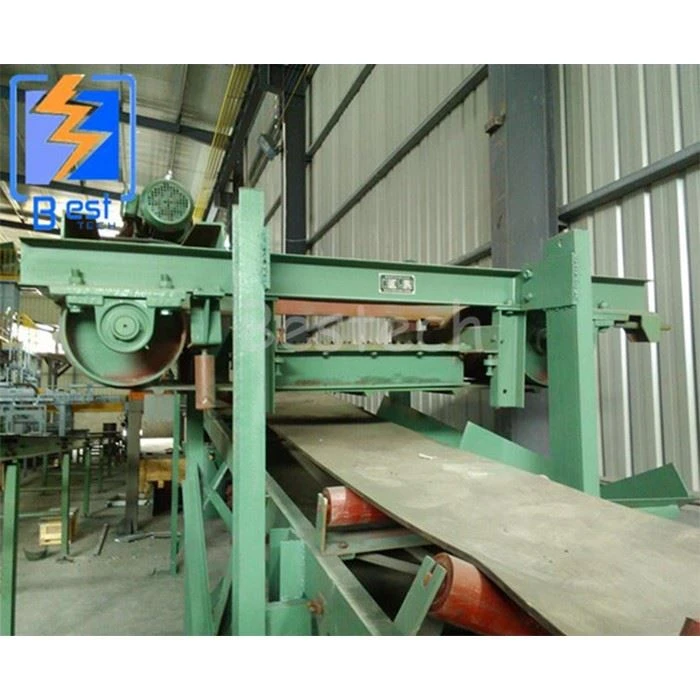

By ensuring that the reused sand meets the required quality standards, we can guarantee the quality of the castings made with the reused sand. This also helps to build trust with our customers, who rely on us to provide high - quality reclamation solutions.
Integration with Production Lines
To make the sand reuse process more efficient, we integrate our Green Sand Reclamation Plants with production lines. For example, our Automatic Sand Casting Molding Production Line is designed to work seamlessly with the reclamation process. The used sand from the casting line can be directly transferred to the reclamation plant, and the reclaimed sand can be fed back into the production line.
Similarly, our Green Sand Process Treatment Production Line and Green Sand Processing Production Line are all part of an integrated system that optimizes the sand reuse process. This integration reduces the time and effort required for sand handling and transportation, and it also improves the overall productivity of the foundry.
Conclusion
In conclusion, sand reuse is a vital part of the foundry industry, and there are several effective strategies available. Whether it's mechanical, thermal, or chemical reclamation, each method has its own advantages and can be used depending on the specific requirements of the foundry.
At our Green Sand Reclamation Plants, we're committed to providing our customers with the best sand reuse solutions. We use a combination of these strategies and strict quality control to ensure that the reused sand meets the highest standards.
If you're in the foundry industry and looking for a reliable supplier of Green Sand Reclamation Plants and related solutions, we'd love to talk to you. Contact us for more information and let's start a discussion about how we can help you optimize your sand reuse process and improve your bottom line.
References
- Campbell, J. (2003). Castings. Butterworth - Heinemann.
- Flemings, M. C. (1974). Solidification Processing. McGraw - Hill.
- Tiryakioglu, M., & Celik, C. (2016). Introduction to Metal Casting Processes. CRC Press.