

As a leading supplier of sand mixer machines, I'm often asked about the different types available in the market. In this blog post, I'll explore the various types of sand mixer machines, their features, and applications, aiming to provide you with a comprehensive understanding to help you make an informed decision for your specific needs.
1. Continuous Sand Mixers
Continuous sand mixers are designed to provide a continuous flow of well - mixed sand. These machines are highly efficient for large - scale operations where a constant supply of mixed sand is required.
Working Principle
The basic working principle of a continuous sand mixer involves the continuous feeding of raw materials such as sand, binders, and additives into the mixing chamber. Inside the chamber, rotating blades or paddles continuously agitate and mix the materials as they move through the machine. The mixed sand then exits the mixer at a steady rate.
Features
- High - volume production: They can produce a large amount of mixed sand per hour, making them ideal for foundries with high - throughput requirements.
- Consistent quality: Due to the continuous mixing process, the quality of the mixed sand remains relatively consistent throughout the production run.
- Automation - friendly: Continuous sand mixers can be easily integrated into automated production lines, reducing the need for manual labor.
Applications
Continuous sand mixers are commonly used in large - scale foundries for casting operations. They are suitable for industries such as automotive, aerospace, and heavy machinery manufacturing, where large quantities of castings are produced on a daily basis.
2. Batch Sand Mixers
Batch sand mixers, as the name suggests, mix sand in batches. A specific amount of sand, binders, and additives are loaded into the mixer, mixed thoroughly, and then discharged before the next batch is loaded.

Working Principle
In a batch sand mixer, the raw materials are first loaded into the mixing chamber. The mixing blades or paddles then rotate at a specific speed to blend the materials together. Once the mixing process is complete, a discharge mechanism is activated to remove the mixed sand from the chamber.
Features
- Flexibility: Batch sand mixers offer greater flexibility in terms of adjusting the recipe for each batch. This is useful when different types of castings require different sand mixtures.
- Easier maintenance: Since the mixing process occurs in batches, it is often easier to clean and maintain the mixer between batches.
- Small - scale suitability: They are well - suited for small to medium - sized foundries or operations where the production volume is relatively low.
Applications
Batch sand mixers are widely used in small foundries, artisanal casting workshops, and for experimental or prototype casting. They are also useful when producing small quantities of specialized castings that require unique sand mixtures.
3. Furan Resin Sand Casting Mixing Moulding Process
The Furan Resin Sand Casting Mixing Moulding Process is a specialized sand - mixing method that uses furan resin as a binder.
Working Principle
In this process, sand is mixed with furan resin and a catalyst. The resin and catalyst react chemically, causing the sand particles to bind together. The sand mixer used in this process is designed to ensure thorough mixing of the sand, resin, and catalyst to achieve a uniform and strong sand mixture.
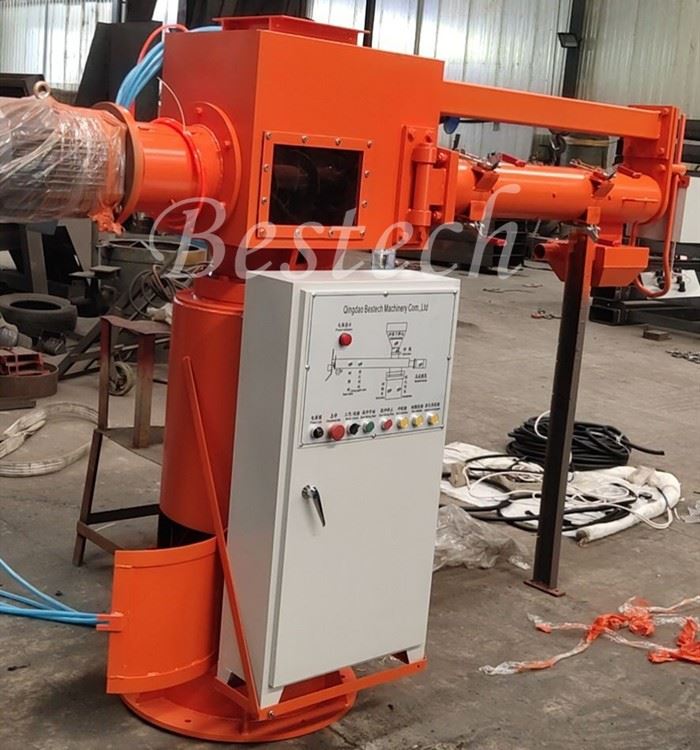
Features
- High - strength castings: The use of furan resin results in sand molds with high strength, which can withstand the pressure and heat of the casting process.
- Good dimensional accuracy: The cured sand molds have excellent dimensional stability, leading to high - quality castings with precise dimensions.
- Reduced gas evolution: Compared to some other sand - binding systems, furan resin sand produces less gas during the casting process, reducing the risk of casting defects.
Applications
This process is commonly used in the production of complex and high - precision castings, such as those used in the automotive and machinery industries.
4. Resin Sand Mixer With Single Arm
The Resin Sand Mixer With Single Arm is a type of mixer specifically designed for mixing resin - bonded sand.
Working Principle
The single - arm design consists of a rotating arm with mixing blades attached. The arm rotates around the central axis of the mixing chamber, while the blades stir and mix the sand, resin, and additives. This design ensures efficient and thorough mixing of the materials.
Features
- Compact design: The single - arm structure makes the mixer relatively compact, requiring less floor space in the foundry.
- Easy operation: It is easy to operate and maintain, with simple controls for adjusting the mixing speed and time.
- Good mixing performance: The single - arm design provides effective mixing action, ensuring that the resin is evenly distributed throughout the sand.
Applications
Resin sand mixers with single arms are suitable for small to medium - sized foundries that use resin - bonded sand for casting. They are commonly used in the production of general - purpose castings.
5. Intensive Sand Mixer
The Intensive Sand Mixer is a high - performance sand mixer that uses a powerful mixing mechanism to achieve rapid and thorough mixing.
Working Principle
Intensive sand mixers typically have multiple rotating blades or rotors that operate at high speeds. These blades generate strong shearing and mixing forces, which quickly break up agglomerates and ensure uniform distribution of the binders and additives in the sand.

Features
- Fast mixing speed: They can mix sand in a very short time, significantly increasing the production efficiency.
- High - quality mixing: The intensive mixing action results in a more homogeneous sand mixture, which improves the quality of the castings.
- Energy - efficient: Despite their high - performance, modern intensive sand mixers are designed to be energy - efficient, reducing operating costs.
Applications
Intensive sand mixers are widely used in large - scale foundries and in industries where high - quality castings are required, such as the aerospace and defense industries.
Choosing the Right Sand Mixer Machine
When choosing a sand mixer machine, several factors need to be considered:
- Production volume: If you have a high - volume production requirement, a continuous sand mixer or an intensive sand mixer may be more suitable. For small - scale operations, a batch sand mixer or a resin sand mixer with a single arm could be a better choice.
- Type of casting: Different casting processes may require specific sand mixtures. For example, the furan resin sand casting process requires a mixer that can handle the chemical reaction between the resin and the catalyst.
- Space availability: Consider the available floor space in your foundry. Compact designs like the single - arm resin sand mixer may be more appropriate if space is limited.
- Budget: Your budget will also play a role in the selection. While high - performance machines like intensive sand mixers may offer better mixing quality and efficiency, they may also come with a higher price tag.
Contact for Procurement and Discussion
If you are in the market for a sand mixer machine and need further information or assistance in choosing the right type for your specific requirements, I encourage you to reach out. We are committed to providing high - quality sand mixer machines and excellent customer service. Whether you have questions about the technical specifications, pricing, or installation, our team of experts is ready to help. Start a conversation with us today to explore how our sand mixer machines can enhance your casting operations.
References
- Campbell, J. (2003). Castings. Butterworth - Heinemann.
- Totten, G. E., & MacKenzie, D. S. (2003). Handbook of Aluminum and Aluminum Alloys. CRC Press.
- Schwerdtfeger, K. (1998). Handbook of Die Casting. Society of Manufacturing Engineers.