

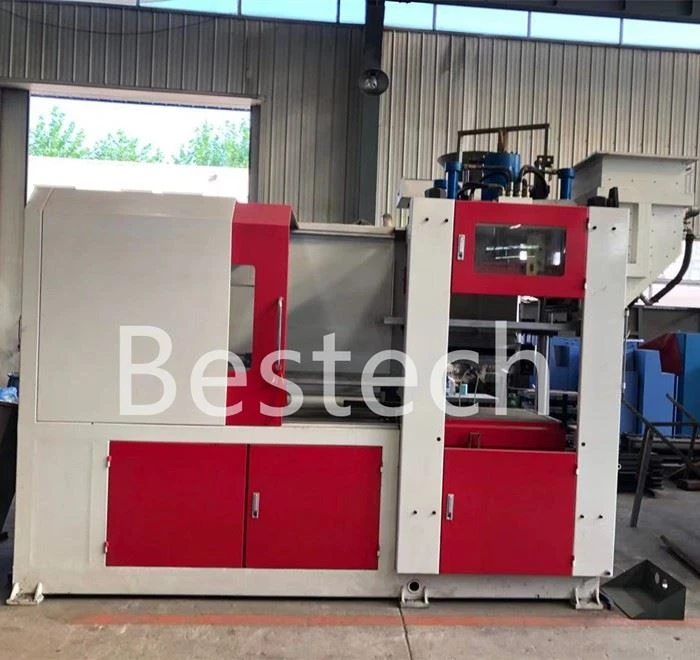
Sand hardness is a crucial factor in the operation of a Green Sand Molding Machine, which can significantly influence the quality of castings and the efficiency of the molding process. As a leading supplier of Green Sand Molding Machines, we have witnessed firsthand the various impacts that sand hardness can have on these machines.
Understanding Sand Hardness in Green Sand Molding
In green sand molding, the hardness of the sand is determined by several factors, including the type of sand, the amount of clay and water added, and the compaction method. The hardness of the sand is typically measured using a sand hardness tester, which provides a numerical value indicating the resistance of the sand to penetration.
The ideal sand hardness for a Green Sand Molding Machine depends on the specific application and the requirements of the casting. Generally, a higher sand hardness is desirable for producing castings with fine details and smooth surfaces, as it provides better dimensional accuracy and reduces the risk of sand erosion. However, excessively hard sand can also lead to problems such as poor mold filling, increased mold wear, and difficulty in mold release.

Impact on Molding Quality
One of the most significant impacts of sand hardness on a Green Sand Molding Machine is on the quality of the mold. A mold with the appropriate sand hardness will have good strength and stability, which is essential for maintaining the shape of the casting during the pouring and solidification process. If the sand is too soft, the mold may collapse or deform under the pressure of the molten metal, resulting in defective castings. On the other hand, if the sand is too hard, it may not be able to conform to the shape of the pattern properly, leading to incomplete mold filling and rough surfaces on the castings.
The hardness of the sand also affects the surface finish of the castings. A harder sand can provide a smoother surface finish, as it is less likely to be eroded by the molten metal. This is particularly important for castings that require a high level of surface quality, such as automotive parts and precision components. However, achieving a very high sand hardness may require additional compaction steps, which can increase the cost and complexity of the molding process.
Impact on Machine Performance
Sand hardness can also have a significant impact on the performance of a Green Sand Molding Machine. A machine that is designed to work with a specific range of sand hardness may experience problems if the sand hardness is outside of this range. For example, if the sand is too soft, the machine may have difficulty in compacting the sand properly, resulting in inconsistent mold density and poor casting quality. On the other hand, if the sand is too hard, the machine may require more power to compact the sand, which can lead to increased energy consumption and premature wear of the machine components.
The wear and tear of the machine components are also affected by the sand hardness. Harder sand can cause more abrasion on the mold boxes, pattern plates, and other contact surfaces of the machine, leading to shorter component life and increased maintenance costs. Therefore, it is important to choose a Green Sand Molding Machine that is suitable for the expected sand hardness and to monitor the sand hardness regularly to ensure optimal machine performance.
Impact on Production Efficiency
The hardness of the sand can also influence the production efficiency of a Green Sand Molding Machine. A machine that is operating with the correct sand hardness can produce molds more quickly and with fewer defects, resulting in higher productivity. For example, a mold with the appropriate sand hardness can be removed from the pattern plate more easily, reducing the cycle time of the molding process.
In addition, the sand hardness can affect the amount of sand that needs to be used in the molding process. A harder sand may require less sand to achieve the same level of compaction, which can reduce the cost of sand and the amount of waste generated. However, it is important to balance the benefits of using less sand with the potential impact on the quality of the castings.
Considerations for Choosing the Right Sand Hardness
When choosing the appropriate sand hardness for a Green Sand Molding Machine, several factors need to be considered. These include the type of casting, the complexity of the pattern, the production volume, and the capabilities of the machine. For example, for large and simple castings, a relatively lower sand hardness may be sufficient, while for small and intricate castings, a higher sand hardness may be required.
It is also important to conduct regular testing of the sand hardness to ensure that it remains within the desired range. This can be done using a sand hardness tester, which is a simple and inexpensive tool that can provide accurate measurements of the sand hardness. By monitoring the sand hardness, any changes in the sand properties can be detected early, allowing for adjustments to be made to the molding process to maintain the quality of the castings.
Our Green Sand Molding Machines and Sand Hardness
As a supplier of Green Sand Molding Machines, we offer a range of machines that are designed to work with different sand hardness levels. Our machines are equipped with advanced compaction systems that can ensure consistent sand hardness throughout the mold, resulting in high-quality castings.
For example, our Foundry Manhole Cover Molding Machine is specifically designed for producing manhole covers with high precision and efficiency. This machine can handle a wide range of sand hardness, allowing for flexibility in the molding process.
Our Static Pressure Molding Machine horizontal flaskless is another popular option for customers who require high-quality castings with consistent sand hardness. This machine uses a static pressure compaction method, which can provide uniform sand density and excellent mold quality.
In addition, our Upper Shooting Type Foundry Horizontal Molding Machine is suitable for producing complex castings with high sand hardness requirements. This machine features an upper shooting system that can ensure efficient sand filling and compaction, resulting in high-quality molds.
Conclusion
In conclusion, sand hardness plays a crucial role in the performance and quality of a Green Sand Molding Machine. By understanding the impact of sand hardness on the molding process, customers can make informed decisions about the appropriate sand hardness for their specific applications. As a supplier of Green Sand Molding Machines, we are committed to providing our customers with high-quality machines and technical support to help them achieve the best results in their casting operations.
If you are interested in learning more about our Green Sand Molding Machines or have any questions about sand hardness and its impact on the molding process, please feel free to contact us. We look forward to discussing your needs and providing you with the best solutions for your foundry.
References
- Campbell, J. (2003). Castings. Butterworth-Heinemann.
- Flemings, M. C. (1974). Solidification Processing. McGraw-Hill.
- Whelan, P. (2009). Sand Casting Technology. Elsevier.