

As a supplier of Green Sand Molding Machines, I often get asked about the sand - reclamation process. In this blog, I'll delve deep into what the sand - reclamation process for a Green Sand Molding Machine is, its importance, and how it ties into the overall performance of our machines such as the Horizontal Flaskless Molding Machine, Upper Shooting Type Foundry Horizontal Molding Machine, and Multipistons Moulding Machine.
Understanding Green Sand Molding
Green sand molding is a widely used casting process in the foundry industry. Green sand, which consists of silica sand, bentonite clay, water, and sometimes additives, is used to create molds for metal casting. The term "green" refers to the fact that the sand is moist or damp during the molding process. Green sand molding machines are designed to compact the green sand around a pattern to form a mold cavity. These machines offer several advantages, including cost - effectiveness, high production rates, and the ability to produce complex shapes.
Why Sand Reclamation?
Sand reclamation is crucial in the foundry industry, especially when using green sand molding machines. After the casting process, the sand in the mold has been subjected to high temperatures, mechanical stress, and chemical reactions. If this used sand is discarded, it not only leads to a significant waste of resources but also incurs high disposal costs. Moreover, continuously using new sand for each casting operation can be expensive and environmentally unfriendly. Sand reclamation helps to reuse the used sand, reducing the consumption of new sand, lowering costs, and minimizing the environmental impact.
The Sand - Reclamation Process
1. Cooling and Separation
The first step in the sand - reclamation process is to cool the used sand. During the casting process, the sand is exposed to high - temperature molten metal, which can heat the sand to very high temperatures. Cooling the sand is essential for subsequent processing steps. After cooling, the sand is separated from the casting and any large debris such as metal pieces, cores, and gating systems. This separation can be achieved through mechanical methods such as shaking, screening, or using magnetic separators to remove any ferrous metal particles.
2. Crushing and De - Clumping
The used sand often forms clumps due to the binding action of the bentonite clay and the high - temperature exposure. Crushing and de - clumping are necessary to break these clumps into individual sand grains. This can be done using crushers, impact mills, or attrition mills. These machines apply mechanical force to break the clumps, ensuring that the sand particles are in a suitable state for further processing.
3. Cleaning
Cleaning the sand is a critical step in the reclamation process. The sand may contain contaminants such as burnt clay, metal oxides, and other impurities. There are several methods for cleaning the sand:
- Mechanical Cleaning: This involves using equipment such as air scrubbers or sand tumblers. Air scrubbers use high - velocity air to remove fine dust and loose contaminants from the sand surface. Sand tumblers rotate the sand, causing the sand grains to rub against each other, which helps to remove the surface contaminants.
- Chemical Cleaning: In some cases, chemical agents may be used to clean the sand. Chemical cleaning can help to remove stubborn contaminants and restore the chemical properties of the sand. However, chemical cleaning should be carefully controlled to avoid introducing new contaminants or altering the sand's properties.
4. Classification
After cleaning, the sand is classified according to its particle size. Different casting applications may require sand of specific particle sizes. Classification can be achieved through screening. Screens with different mesh sizes are used to separate the sand into different size fractions. This ensures that the reclaimed sand has a consistent particle size distribution, which is important for the quality of the molds produced by the green sand molding machine.
5. Re - Conditioning
Once the sand has been reclaimed and classified, it needs to be re - conditioned. Re - conditioning involves adding bentonite clay, water, and other additives to the reclaimed sand to restore its molding properties. The amount of bentonite clay and water added depends on the properties of the reclaimed sand and the requirements of the casting process. The re - conditioned sand should have the right moisture content, clay content, and flowability to be suitable for use in the green sand molding machine.
6. Quality Control
Throughout the sand - reclamation process, quality control is essential. Samples of the reclaimed sand are taken at various stages and tested for properties such as moisture content, clay content, grain size distribution, and strength. These tests ensure that the reclaimed sand meets the required standards for use in the green sand molding machine. If the sand does not meet the standards, adjustments can be made to the reclamation process, such as changing the cleaning parameters or the re - conditioning formula.

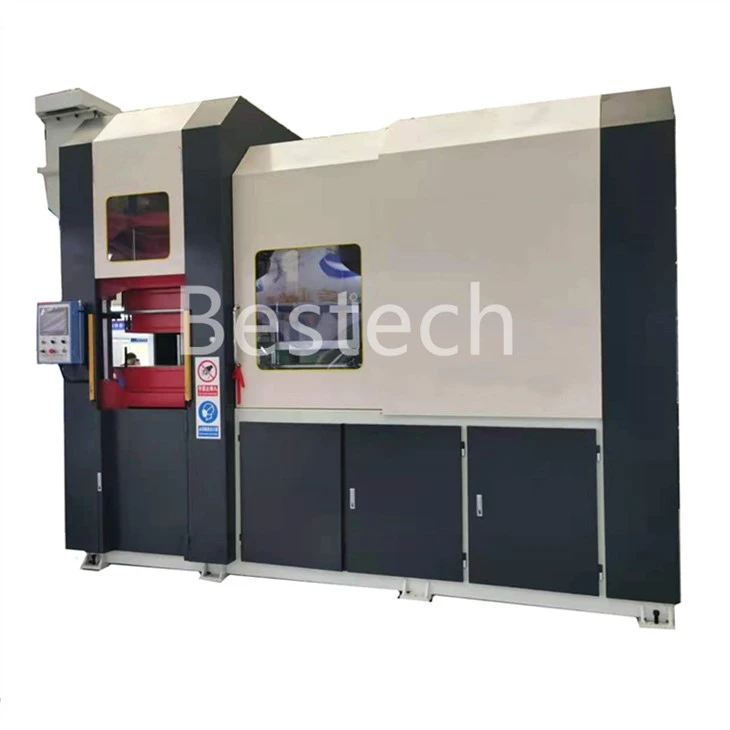
Impact on Green Sand Molding Machines
A well - implemented sand - reclamation process has a positive impact on the performance of green sand molding machines. Reclaimed sand that is properly conditioned has consistent properties, which leads to more uniform mold compaction in the molding machine. This results in higher - quality molds with better dimensional accuracy and surface finish. Additionally, using reclaimed sand can reduce the wear and tear on the molding machine components. Since reclaimed sand is generally cleaner and more uniform in size, it is less likely to cause blockages or excessive abrasion in the machine's sand - handling systems.
Conclusion
The sand - reclamation process for green sand molding machines is a complex but essential part of the foundry operation. It offers numerous benefits, including cost savings, resource conservation, and environmental protection. As a supplier of green sand molding machines, we understand the importance of a reliable sand - reclamation process. Our machines, such as the Horizontal Flaskless Molding Machine, Upper Shooting Type Foundry Horizontal Molding Machine, and Multipistons Moulding Machine, are designed to work in harmony with an efficient sand - reclamation system.
If you are in the foundry industry and are looking for high - quality green sand molding machines or need advice on sand reclamation, we are here to help. Contact us to discuss your specific requirements and explore how our products can improve your casting operations.
References
- Campbell, J. (2003). Castings. Butterworth - Heinemann.
- Schweitzer, P. A. (2012). Handbook of Fluidization and Fluid - Particle Systems. CRC Press.
- Totten, G. E., & MacKenzie, D. A. (2003). Handbook of Aluminum Volumes I - III. CRC Press.