

Hey there! As a supplier of Core Shooting Machines, I often get asked about the shooting temperature requirements of these machines. It's a crucial aspect that can significantly impact the quality of the sand cores produced. So, let's dive right in and explore what these temperature requirements are all about.
Why Temperature Matters in Core Shooting
First off, why is the shooting temperature so important? Well, the shooting temperature plays a vital role in the curing process of the sand mixture used to create the cores. When the sand is shot into the core box at the right temperature, it ensures proper bonding of the sand grains, which in turn affects the strength, dimensional accuracy, and surface finish of the final core.
If the temperature is too low, the sand mixture may not cure properly, resulting in weak cores that are prone to breakage during handling or in the casting process. On the other hand, if the temperature is too high, it can cause the sand to over - cure, leading to issues like excessive brittleness and cracking.
Factors Affecting Shooting Temperature
There are several factors that can influence the ideal shooting temperature for a Core Shooting Machine.
Sand Mixture Composition
The type of sand and the binder used in the mixture are major factors. Different sands have different thermal properties, and binders also react differently to heat. For example, some resin - bonded sands require a specific temperature range for the resin to cross - link and form a strong bond. If you're using a phenolic resin binder, the shooting temperature might typically be in the range of 180 - 250°C (356 - 482°F).
Core Size and Complexity
Larger and more complex cores may require a different shooting temperature compared to smaller, simpler ones. Bigger cores take longer to heat up and cool down, so the shooting temperature might need to be adjusted accordingly to ensure uniform curing throughout the core. A complex core with thin walls and intricate details may also need a more precise temperature control to avoid uneven curing.
Machine Design and Capacity
The design of the Core Shooting Machine itself can affect the shooting temperature. Some machines are better at maintaining a consistent temperature during the shooting process. For instance, machines with advanced heating systems and insulation can provide more stable temperature conditions. Also, the capacity of the machine, i.e., how much sand it can shoot at once, can play a role. A high - capacity machine shooting a large volume of sand may need a slightly higher temperature to ensure that all the sand in the core box reaches the required curing temperature.
Recommended Temperature Ranges
While the exact shooting temperature can vary depending on the factors mentioned above, here are some general guidelines for different types of Core Shooting Machines.
Horizontal Sand Core Shooter
For a Horizontal Sand Core Shooter, when using a common furan resin - bonded sand, the shooting temperature usually ranges from 150 - 220°C (302 - 428°F). This type of machine is often used for medium - sized cores, and this temperature range helps in achieving good core strength and surface quality.
Foundry Shell Core Shooter Machine
Foundry Shell Core Shooter Machines are typically used to produce thin - walled shell cores. When using a shell - molding resin, the shooting temperature is often in the range of 200 - 280°C (392 - 536°F). The higher temperature is necessary to quickly form a hard shell on the core surface while still allowing the interior to cure properly.
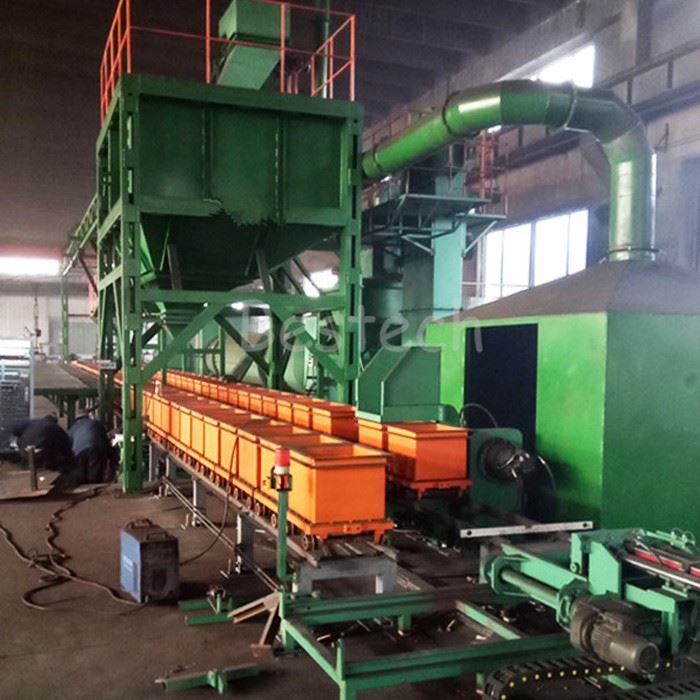

Core Shooting Machine With Conveyor Belt
This type of machine is suitable for continuous production of cores. For a standard sand - binder combination, the shooting temperature can be around 160 - 230°C (320 - 446°F). The conveyor belt system allows for a steady flow of cores, and this temperature range helps in maintaining a consistent quality across all the cores produced.
Monitoring and Controlling Shooting Temperature
To ensure that the shooting temperature is within the desired range, it's essential to have proper monitoring and control systems in place. Most modern Core Shooting Machines are equipped with temperature sensors that can accurately measure the temperature inside the core box and the shooting chamber.
These sensors are connected to a control panel, where operators can set the desired temperature and monitor the actual temperature in real - time. If the temperature deviates from the set value, the control system can automatically adjust the heating elements to bring the temperature back to the correct range.
Regular maintenance of the temperature sensors and heating elements is also crucial. Over time, sensors can become less accurate, and heating elements may wear out, which can lead to temperature fluctuations.
Importance of Temperature Calibration
Calibrating the temperature sensors and control systems of the Core Shooting Machine is a must. This ensures that the temperature readings are accurate and that the machine is operating at the correct temperature. Calibration should be done at regular intervals, preferably according to the manufacturer's recommendations.
An inaccurate temperature reading can lead to sub - standard core production, which can ultimately result in increased costs due to scrap and rework. So, investing in proper calibration equipment and procedures is well worth it in the long run.
Conclusion
In conclusion, the shooting temperature requirement of a Core Shooting Machine is a complex but critical aspect of the core - making process. It's influenced by factors like sand mixture composition, core size and complexity, and machine design. By understanding these factors and following the recommended temperature ranges for different types of machines, you can produce high - quality sand cores consistently.
If you're in the market for a Core Shooting Machine or need more information about shooting temperature requirements for your specific application, don't hesitate to get in touch. We're here to help you make the right choice and ensure that your core - making process runs smoothly.
References
- "Sand Casting Handbook" by Peter Groover
- "Foundry Technology: Principles and Practice" by John Campbell